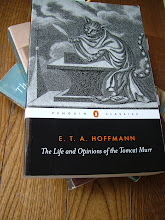
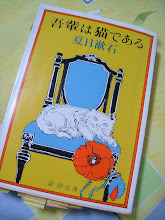
Photos taken at Hiroshima University/撮影場所:広島大学


English translation/英訳: Charlottell
After I resigned from the university and joined the newspaper, everyone whom I met looked so surprised. Some of them asked me for the reason. And some of them praised that I had made a very big decision. I did not think that quitting the university and working for the newspaper was a strange phenomenon. The question of whether will I succeed in my new job in the newspaper or not, is fundamental from the very beginning. Anticipating something which will not succeed and turned the path that I have come along for the past more than ten years at once, is indeed a reckless idea. Even I myself was surprised about that. But if they were surprised at my abandoning a post in a prestigious place like the university and working for the newspaper, I would like them to stop thinking that way. University is perhaps a place where honorary researchers lodge themselves. After enduring for twenty to thirty years, they may become high-ranking government officials. They may also have other kinds of expediencies. By thinking that way, it is no wonder that university is a fine place. Regarding the candidates who climb into the Red Gate (main entrance of University of Tokyo) and try to crawl up the rostrum-- I do not know how many of them since I did not calculate, if I walk up and ask them one by one, it would be as many as it could kill all of my time. The fineness of the university can be understood by that matter. I cannot agree more on that as well. But what I mean is that I only agree on the matter that university is a fine place, but I do not agree on saying that working for a newspaper is a bad occupation. A Malay poem "Selepas Kapur Barus" ("After the Camphor") by Rosli K. Matari.
  It is very obvious that the female protagonists portrayed by Nathaniel Hawthorne(1804-1864) in The Blithedale Romance (1852) are a kind of significant comparison. Despite sharing the same father, Zenobia and Priscilla are completely different in their outlook and appearances, such as the dresses they wear, the accessories Zenobia uses, the way they speak, their behavior, way of thinking and other aspects. The first has inherited her uncle’s wealth by his sudden death, therefore she is always dressed elegantly, full of self-confidence, embracing feminist thoughts, the star in the public’s eyes; while the latter is no more than a seamstress who cannot afford to live in luxury, she doesn’t have her own thought but depends upon another’s order; the ghostly and timid character makes her even invisible if she is staying quietly in the corner.

 Some significant images and symbols such as Irish heroic figures, Celtic and Christian symbols, and many more are found in William Butler Yeats’s poems. Heroic images in Yeats’s poems are perceived as a vehicle for protesting against the religion, social structure, political principles and cultural standards of modern Ireland. The definition of a hero is: one who possesses authority over the average, who is admired by others for his or her noble quality or courage.